How to Plan a Wedding Budget Without Losing Your Mind
Spending sleepless nights planning your wedding budget? Worried about the national average figure of over 20,000? Here is how to plan your budget in the simplest way.
Most brides don't actually sit down and plan a budget. They pick a venue they love, get a few quotes, and then reverse-engineer a number that makes the whole thing feel affordable. It rarely works. By the time the flowers and the band and the "just one more" hen do add-on show up, the number's crept up by a few thousand pounds and nobody quite knows how.
So let's do it properly, in the right order.
Start with what you actually have, not what a wedding "should" cost
Before you look at a single venue, work out your real number. Savings, any contribution from parents, what you can realistically put aside each month between now and the date. Not the £20,000-ish figure you've seen quoted everywhere as the UK average, your number, based on your bank account.
This matters more than people admit. Bridebook puts expected 2026 UK wedding spend somewhere between £20,604 and £23,994, and Battle Abbey Weddings reports similar figures with signs of costs finally levelling off after a few years of steep rises. Fine data points. Not targets. Plenty of weddings cost £9,000 and feel completely complete; plenty cost £35,000 and still feel like something's missing. The number only works if it's yours.
Guest list first, everything else after
Here's the bit almost every couple gets backwards. They fall for a venue, then try to fit their guest list around it. Do it the other way. Guest count drives cost more than any other single decision you'll make, more than the venue, more than the region, more than the flowers you agonise over on Pinterest at midnight.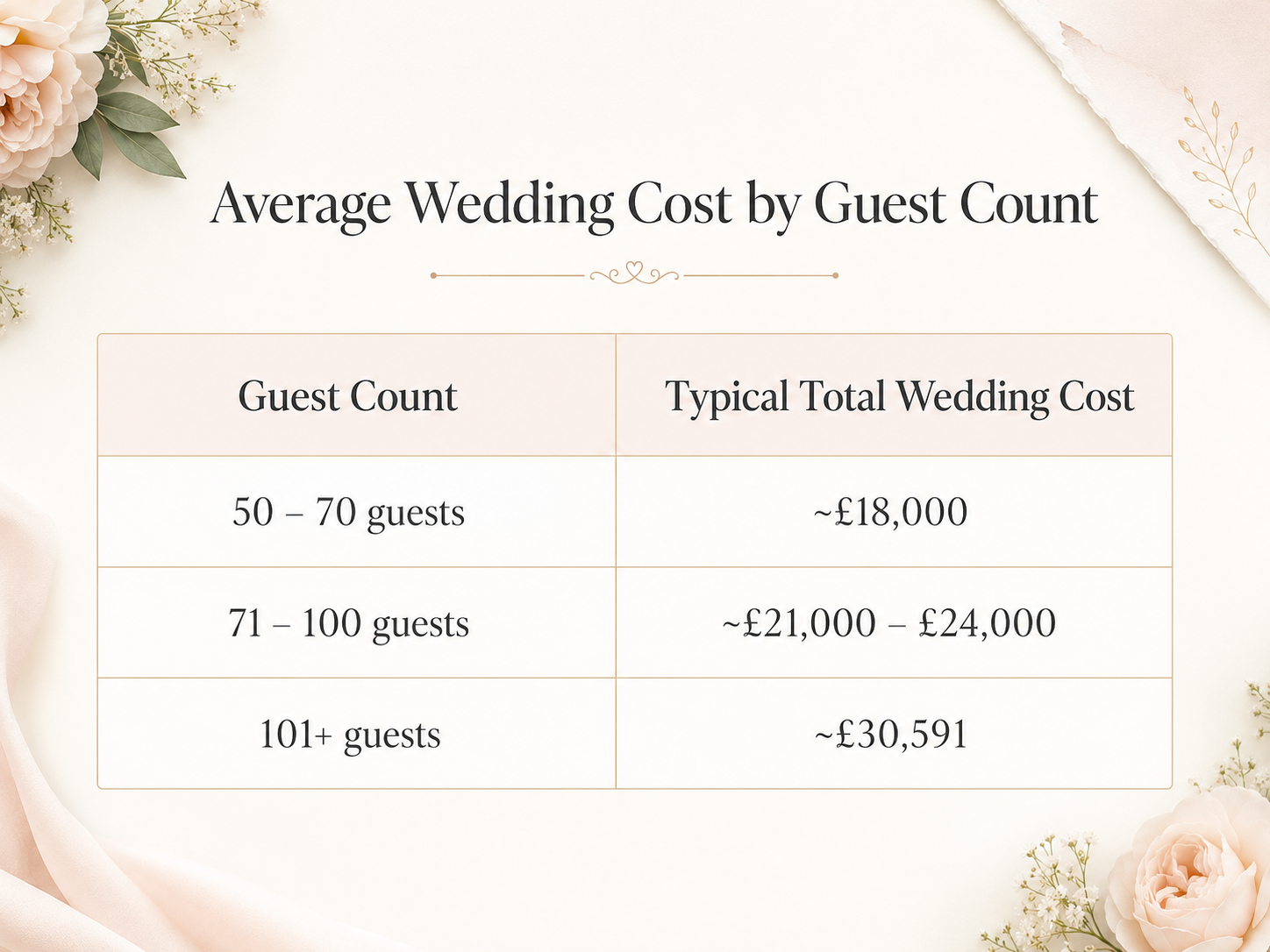
The gap isn't subtle. Cutting your list from 100+ down to 60 could realistically save you the price of a second honeymoon, or a house deposit, or just some breathing room in the run-up to the day.
If your numbers aren't adding up somewhere down the line, this is the lever to pull before you start cutting corners on catering or downgrading your photographer.
Where the money actually goes
Venue and catering will eat the biggest chunk. Photography and videography together tend to hold a fairly steady share regardless of budget size, which tells you something about how non-negotiable people consider them. Everything else splits the rest, and how much each category gets really comes down to what you personally care about.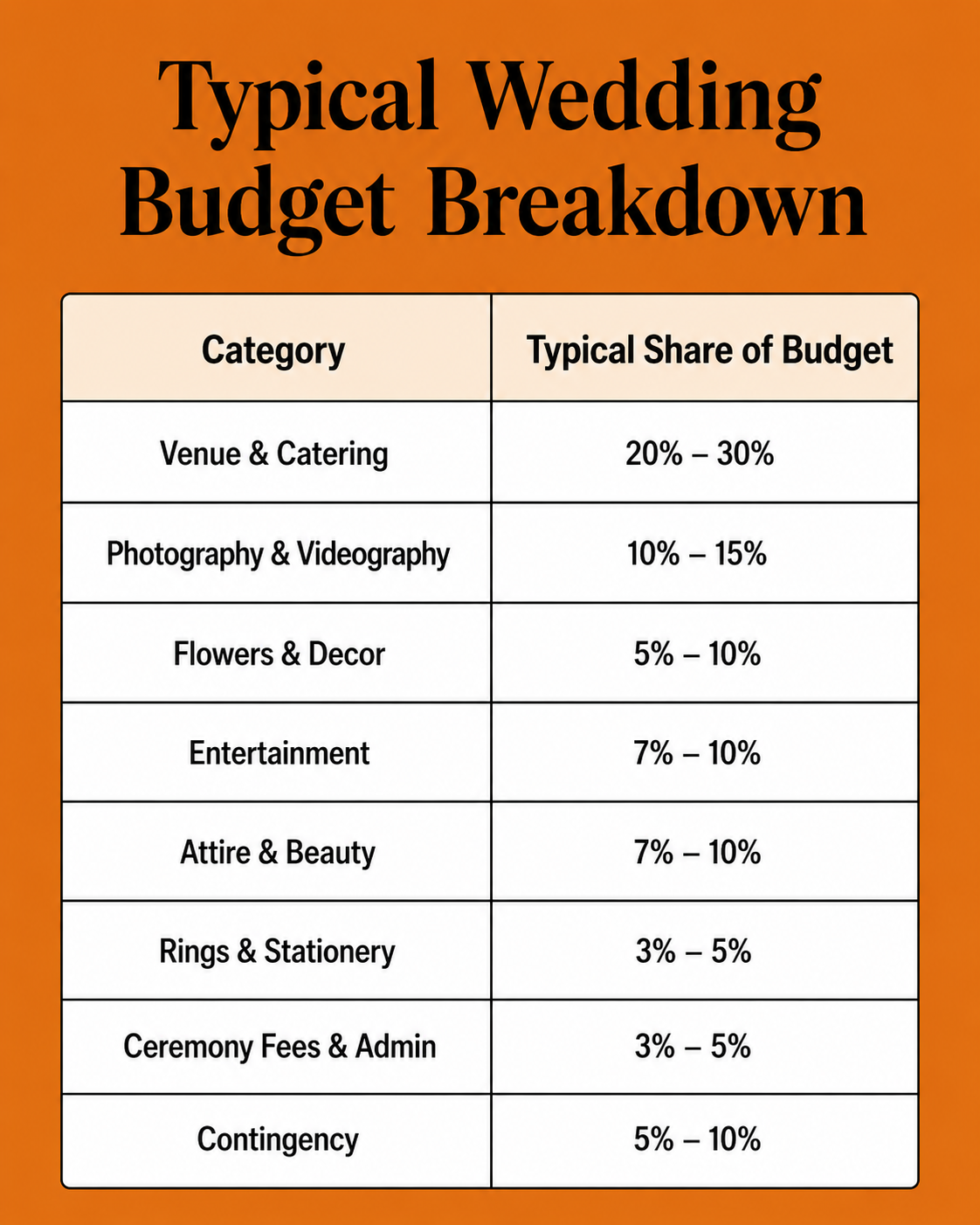
There's no universal formula that works for every couple, though. A couple prioritising a live band over a DJ will shift a chunk straight out of decor. A couple who couldn't care less about flowers can put that saving toward a better photographer. Budgeting isn't really about hitting percentages, it's about deciding what you'd regret skimping on.
Build in a contingency fund, seriously, don't skip this
Every single wedding guide says this, and every single wedding still goes over budget somewhere. Set aside 5 to 10% of your total from the start and treat it as untouchable, not a nice-to-have. Alterations always cost more than the quote. Suppliers sometimes charge extra for parking, or a meal on the day, or overtime because your speeches ran long. None of this is dramatic; it's just normal, and it's a lot less stressful when there's already a pot for it.
Talk to suppliers honestly, not strategically
There's a version of wedding planning where couples try to squeeze every supplier for a discount, treating each quote like a negotiation to win. It rarely goes well. What actually works better is telling your florist or photographer your real budget and asking what they can do within it. Most suppliers would rather adjust scope, fewer hours, a smaller album, one camera instead of two, than lose the booking entirely. You'll usually end up with something that fits properly instead of a discount bolted onto a package that never suited you.
Decide your two or three priorities and protect them
Every couple has a version of the day that matters to them specifically. For some, it's the photos. For others, it's the food, or having a live band instead of a playlist on a laptop. Figure out what yours are early, ring-fence the budget for them, and let everything else flex. This sounds obvious written down, but most budget overspends happen because couples never actually decided what mattered most, so every category crept up a little, instead of two categories going up on purpose and the rest staying lean.
A rough order to plan things in
- Set your number.
- Set your guest list.
- Book the venue, this locks in the biggest cost, so do it before anything else.
- Book photography and videography if they're priorities, good ones get booked out 9 to 12 months ahead.
- Then flowers, entertainment, and the smaller details, roughly in order of how much you care about them.
It's not glamorous. But couples who plan in this order tend to hit their number. Couples who plan backwards, falling for the dress, then the venue, then panicking about the guest list in month four, are usually the ones asking their parents for "just a bit more" three weeks before the big day.
The wedding will be over in a day. The budget conversations, done properly early on, are what stop the whole thing turning into a stressful year instead of an exciting one.
Frequently Asked Questions
How much should I save before I start wedding planning?
Enough to cover your venue deposit and roughly a third of your total budget, most venues and suppliers ask for deposits well before the big day, so having a cushion early avoids scrambling later.
What's the biggest mistake couples make with wedding budgets?
Booking the venue before finalising the guest list. It locks in a per-head cost before you know how many heads you're actually paying for.
Should parents' contributions be factored in before or after setting a budget?
Before. Ask early, awkward as it feels, so your real number reflects what's actually available rather than what you hope will show up.
Is 10% contingency really necessary for a smaller wedding?
Yes. Smaller weddings still have alterations, delivery charges, and last-minute add-ons. The percentage matters more than the total size of the day.
How do I stop a wedding budget from creeping up over months of planning?
Revisit it monthly, not just once at the start. Small "just this once" additions are how most couples end up hundreds or thousands over their original number.