Unique Wedding Venues UK: The Best Alternative Spaces
Uncommon and unique venues become one of the key memories of your wedding. Here is everything you need to know about the best alternative spaces for wedding in the UK.
A hotel ballroom will always do the job. But for a growing number of UK couples, "doing the job" isn't the point. They want a venue that guests are still talking about a year later — a Brunel-designed ship, a Roman bathhouse, a disused chapel, a dockside warehouse with the original steel columns still standing.
This guide covers what actually makes a venue "unique" rather than just unusual for the sake of it, the main categories of alternative UK venues, realistic costs, specific venues worth researching, and the practical questions these spaces raise that a standard hotel never will.
What Makes a Venue Genuinely Unique
Plenty of venues call themselves unique in their marketing. The ones that actually deliver tend to share one thing: the building or landscape does most of the work before you've spent a penny on styling. A converted Victorian mill with exposed brick and cast-iron columns, or a historic ship with original timber decking, needs far less floral and decorative dressing than a blank function room, because the character is already built in.
That's a genuine budget consideration, not just an aesthetic one. Couples choosing these spaces are often trading a lower styling bill for a higher venue fee, and the maths can work out surprisingly evenly.
Types of Unique Wedding Venues in the UK
|
Venue Type |
Typical Capacity |
What It Offers |
Watch Out For |
|---|---|---|---|
|
Industrial and maritime conversions |
80–500 |
Raw architectural character, minimal styling needed |
Acoustics and heating in large open spaces |
|
Museums and landmark attractions |
Varies widely |
A conversation-starting backdrop, built-in prestige |
Strict access times and conservation restrictions |
|
Geological and natural wonders |
20–300 |
Genuinely one-off settings no interior can match |
Wet-weather contingency, especially outdoors |
|
Wildlife and safari venues |
Up to 120 |
Something no other venue in the country can offer |
Premium per-head pricing |
|
Deconsecrated chapels and historic buildings |
60–140 |
Atmosphere and architecture that need little decoration |
Usually ceremony-only, dry hire |
Industrial and Maritime Conversions
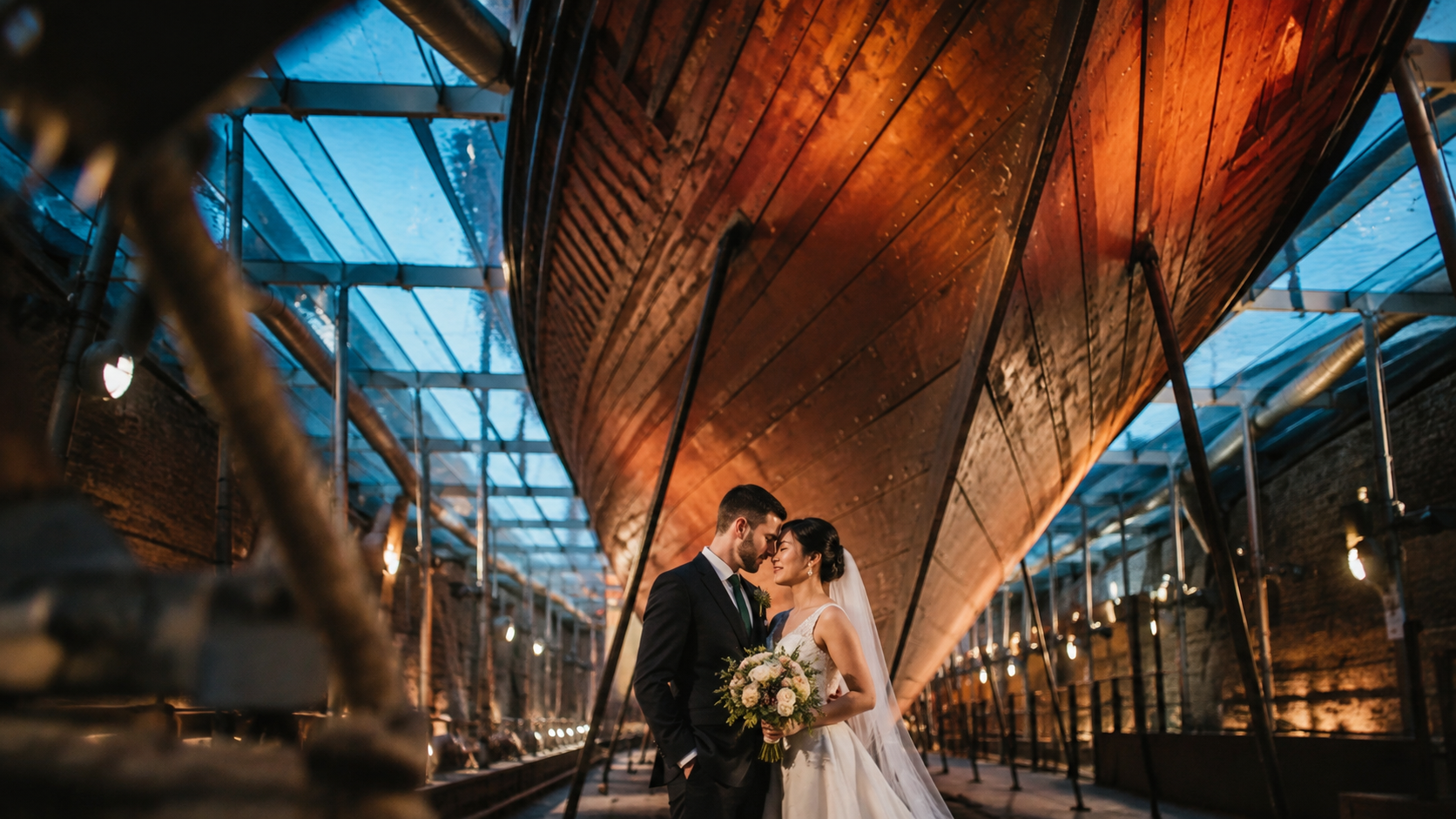
SS Great Britain in Bristol — Isambard Kingdom Brunel's 1843 iron-hulled steamship — hires from around £3,000 and holds up to 140 guests, making it one of the more accessible entries on this list given what it delivers visually. Haarlem Mill in Derbyshire, a restored 1777 cotton mill, pairs exposed brick with more contemporary industrial styling for up to 160 guests. On a larger scale, the Rum Warehouse in Liverpool is a 1950s dockside building with floor-to-ceiling windows and space for 80 to 500 guests, with hire starting from around £9,740 for a full event and roughly £6,900 for a twilight slot.
London has its own version of this in Old Sessions House, a former Victorian courthouse in Clerkenwell with atmospheric rooms across several floors, and 100 Barrington in Brixton, which offers an entirely blank industrial canvas of exposed brick and steel.
Museums and Landmark Attractions
Royal Museums Greenwich puts three genuinely distinctive spaces on the table: the Cutty Sark, a restored Victorian clipper ship; the Queen's House, a former royal residence; and the Peter Harrison Planetarium. Beyond Greenwich, the Natural History Museum, the V&A, Somerset House, and even the Tower of London are all available for wedding receptions, each with a built-in sense of occasion that a purpose-built venue can't manufacture.
The trade-off is access. Museum venues typically host events outside opening hours, which can mean a late evening start and firm restrictions around what can touch the exhibits.
Geological and Natural Wonders
The Roman Baths in Bath allow open-air ceremonies beside the original mineral-rich waters of the Great Bath, with rates ranging from £1,600 for a sunrise slot to £7,300 for exclusive evening hire and capacity for up to 300 guests. It's one of the clearest examples of a venue where the setting genuinely can't be replicated anywhere else in the country.
Tunnels Beaches in Devon takes a similar approach from a different angle: hand-carved Victorian tunnels lead through the rock to a private beach, and the venue publishes clear tariff information rather than the enquiry-only pricing common at unusual venues. Porthpean House, a historic beachfront property near St Austell in Cornwall, adds a different kind of interest — it featured as a filming location in the romantic film About Time.
Wildlife and Safari Venues
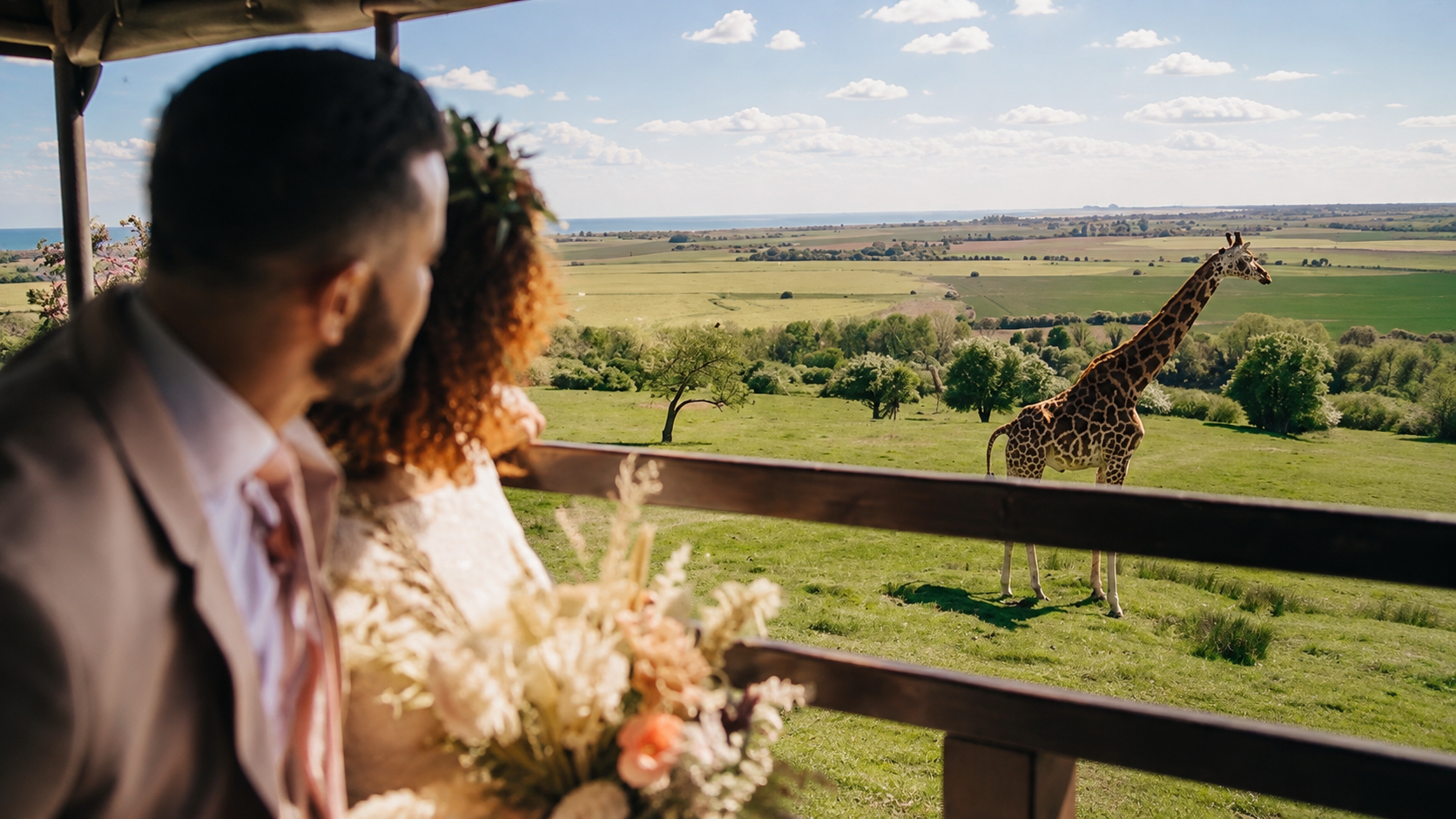
Port Lympne Reserve in Kent is the standout here: a wildlife reserve offering private safaris and luxury lodging at Tiger Lodge, with wedding menus starting from around £187 per person for up to 120 guests. It's a premium price point, but genuinely unlike anything else on a UK venue shortlist.
How Much Do Unique Wedding Venues Cost in the UK
Pricing across this category varies more than almost any other venue type, since the "product" being sold is partly the building and partly the experience.
|
Venue |
Location |
Capacity |
Cost Guide |
|---|---|---|---|
|
SS Great Britain |
Bristol |
Up to 140 |
From £3,000 |
|
Asylum Chapel |
Peckham, London |
Up to 120 |
£1,400–£4,000 |
|
Roman Baths |
Bath |
Up to 300 |
£1,600 (sunrise) to £7,300 (exclusive evening) |
|
Haarlem Mill |
Derbyshire |
Up to 160 |
Standard industry day rates |
|
Rum Warehouse |
Liverpool |
80–500 |
From £6,900 (twilight) to £9,740 |
|
Carlton Towers |
North Yorkshire |
Up to 250 |
Menus from £60 per person |
|
Port Lympne Reserve |
Kent |
Up to 120 |
Menus from £187 per person |
Some of these figures are flat hire fees; others are per-head menu prices, which is worth checking carefully before comparing two venues side by side. A £3,000 hire fee at SS Great Britain still needs catering added on top, while Carlton Towers' £60-per-head figure already bundles food into the number.
For context, the national average venue hire fee across all UK venues, excluding catering, is £6,040. Unique venues sit either well below that (industrial and chapel conversions) or considerably above it (wildlife reserves, exclusive landmark hire), with very little in the middle.
Woodland and Nature-Based Alternatives
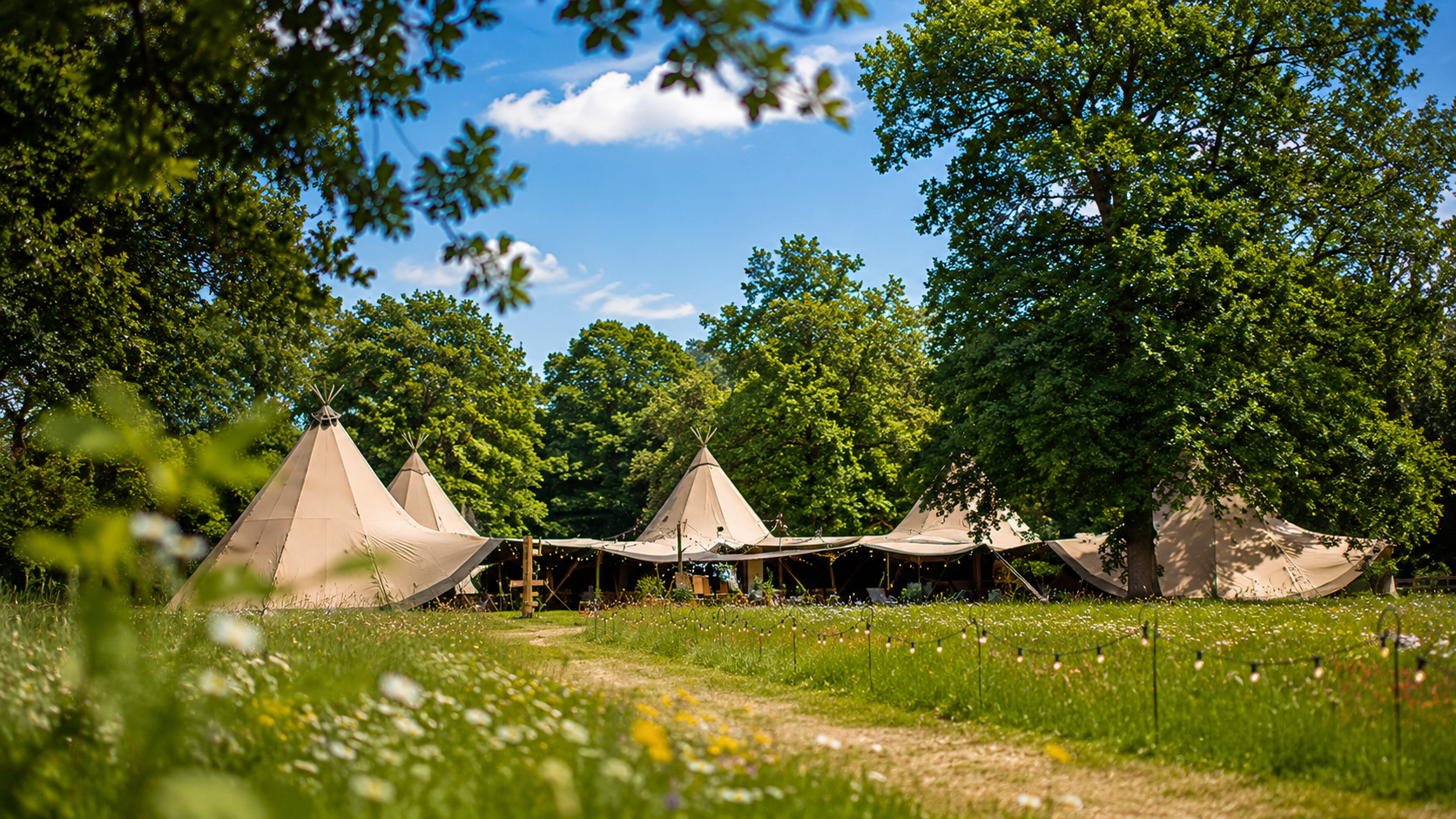
Alongside architectural oddities, a strong strand of the unique venue market is built around genuinely wild settings rather than converted buildings. fforest Farm, set within a 200-acre nature reserve on Pembrokeshire's River Teifi, runs entire wedding weekends built around a Giant Hat Tipi, a stone quarry, and a tiny stone pub, with a cedar barn seating up to 160 for the main meal.
Dibbins Wood in Northamptonshire takes couples into 90 acres of private ancient woodland for vows in a natural clearing known as the Green Chapel, before moving guests to an adjacent tipi. Two Woods Estate in West Sussex offers a ceremony aisle flanked by more than 100 towering redwood trees, and Marshwood Manor in Dorset centres its ceremony around a historic stone church porch rescued from a local parish rebuild in 1874. None of these need much in the way of decoration — the setting already is the decoration.
What to Check Before Booking an Unusual Venue
Unique venues raise questions a standard hotel simply doesn't. Before you commit, get clear answers on:
Legal ceremony status first, since many of the most striking spaces — chapels, museums, ships, natural landmarks — are licensed for receptions but not for the legal ceremony itself, which means booking a register office slot separately. Wet-weather contingency matters enormously for anything outdoor, underground, or coastal, so ask exactly where guests would go and how much covered space there is. Access for older or less mobile guests is worth checking early too, particularly at woodland, tunnel, or ship venues where paths and gangways aren't always level. And confirm what conservation or heritage restrictions apply — candles, confetti, and even certain decorations are often restricted at museums, historic ships, and listed buildings.
Questions to Ask a Unique Venue Before You Book
- Does the venue hold a civil ceremony licence, or is this reception-only?
- What is the wet-weather or bad-weather contingency, and how many guests does it cover?
- Are there restrictions on confetti, candles, or open flame due to conservation rules?
- Is the quoted price a flat hire fee or a per-head menu price?
- How accessible is the site for guests with mobility needs?
- Is catering in-house, or will we need to source external caterers?
- What time must the event end, and are there noise or access restrictions from neighbouring buildings or land?
Frequently Asked Questions
What are the most unique wedding venues in the UK?
Standout examples include SS Great Britain in Bristol, a Brunel-designed 1843 ship; the Roman Baths in Bath, which allows ceremonies beside the original Roman waters; and Port Lympne Reserve in Kent, a wildlife reserve with private safaris. Each offers a setting that can't be replicated at a standard hotel or country house.
Are unique wedding venues more expensive than traditional ones?
Not necessarily. Industrial conversions and deconsecrated chapels often undercut the national average venue hire fee of £6,040, since the building itself does most of the visual work. Landmark and wildlife venues, by contrast, sit well above average, particularly where menus are priced per head at premium rates.
Can I get married legally in an unusual venue like a museum or ship?
It depends on whether the site holds a civil ceremony licence. Many unique venues, including several London chapels and museum spaces, are licensed for receptions but not for the legal ceremony, which means you'll need to hold the legal ceremony at a register office or another licensed venue beforehand.
Do unique venues need less spent on decoration?
Often, yes. Venues with strong existing character, such as industrial mills, historic ships, and natural landmarks, need far less floral and decorative styling than a blank function room. That saving can offset a higher venue fee, though it's worth costing both scenarios before assuming one is cheaper overall.
What should I ask about weather contingency at an outdoor unique venue?
Ask specifically where guests would shelter, how many people the covered space holds, and whether there's a walkway between the ceremony and reception areas that keeps guests dry. A vague answer about "moving inside if needed" isn't a real contingency plan.
Are unusual venues harder to get to for guests?
Some are. Woodland, coastal, and tunnel venues in particular tend to sit outside towns and cities, so it's worth checking travel times and nearby accommodation before booking. Industrial and museum venues in cities tend to be more straightforward for guests to reach.
Is it harder to get a marriage licence approved for an unconventional location?
In England and Wales, the venue itself needs to hold the civil ceremony licence rather than the couple applying separately, so the practical question is simply whether the venue you've chosen has one. In Scotland, the rules are more flexible, and a registrar or authorised celebrant can agree to conduct a ceremony at almost any location.