Wedding Planning Mistakes Couples Make (and How to Avoid Them)
You're bound to make mistakes in your wedding planning, and keeping them to a minimum should be the ultimate goal. Here are the most common mistakes couples make when planning their wedding day so that you can learn from them.
Most wedding planning advice tells you what to do. This is the other side of it — the mistakes that show up again and again in UK wedding planning, the reasons they happen, and what to do instead. None of these are unusual or embarrassing; they're the default outcome of planning something for the first time, under time pressure, with a lot of moving parts. Knowing them in advance is most of the fix.
Not setting a real budget before you start
The mistake isn't spending too much — it's not deciding a number at all before you start looking at venues and suppliers. Without a figure agreed in advance, every individual decision feels reasonable in isolation, and the total creeps up without anyone noticing until the deposits are already paid.
This is a genuinely common problem, not a rare one: research comparing the 2026 Hitched and Bridebook reports found that 56% of UK couples overspend their original budget, by an average of £4,800. The current average cost of a UK wedding day sits at around £20,600–£22,000 excluding the ring and honeymoon, so a £4,800 overspend is a meaningful jump for most couples, not a rounding error.
The fix: agree a total budget and a 10–15% contingency before contacting any supplier, and track actual spend against it as deposits go out — not just once, at the start.
Booking the venue before the guest list is settled
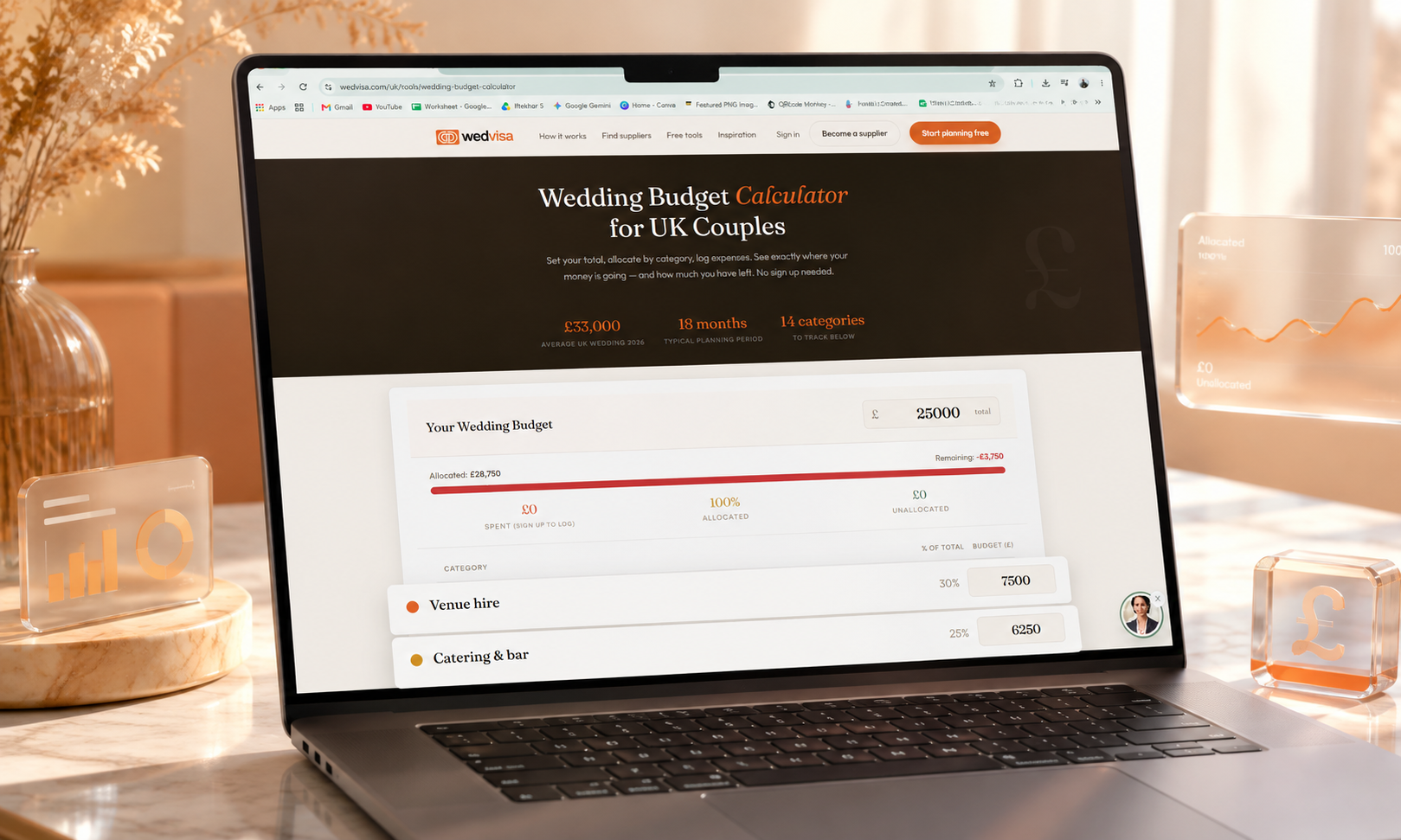
Wedvisa’s Free Wedding Budget Calculator
It's an easy trap: you fall for a venue, and only afterwards start working out who's actually coming. But guest count is one of the biggest cost multipliers in a wedding budget, and venues have hard capacity limits. A venue that suits 150 people feels echoey and expensive per head at 60 guests; a venue you love for its intimacy might simply not fit your extended family once the list is finished.
The fix: get a realistic headcount agreed with your partner — including the awkward conversations about plus-ones and distant relatives — before venue viewings start, not after.
Booking suppliers in the wrong order
Not every supplier needs booking at the same speed. Venues, photographers, videographers, and registrars or celebrants can each only serve one wedding per day or slot, so they get booked out furthest in advance — often 12 months or more for a popular date. Florists, cake makers and hair/make-up artists generally have more flexibility, since many can work multiple events across a single weekend.
Couples who treat every supplier the same — or worse, book flowers and cake before checking the photographer's diary — often find their preferred photographer is already booked by the time they get round to asking.
The fix: book once-a-day suppliers immediately after the venue is confirmed, and let everyone else follow at a more relaxed pace.
Leaving the legal paperwork too late
Unlike almost everything else in wedding planning, the legal side has hard statutory deadlines, and they differ slightly across the UK's four nations:
- England, Wales and Scotland: notice must be given at least 29 days before the ceremony, per GOV.UK's guidance and mygov.scot's guidance.
- Northern Ireland: the minimum is 28 days, per nidirect's guidance.
Couples who leave this until the final weeks have no room to manoeuvre if a document is missing or an appointment needs rebooking — and turning up to a notice appointment with the wrong paperwork (photocopies instead of originals, for example) can mean losing the fee and the slot entirely.
The fix: most registrars recommend giving notice 10–12 weeks before the wedding, even though the legal minimum is shorter. Treat that as the real deadline, not the statutory one.
Assuming a humanist ceremony is legally binding everywhere
This one catches couples out specifically because the rule genuinely differs by nation. Humanist ceremonies are fully legally binding in Scotland, and have grown substantially in popularity there — around 30% of Scottish marriages are now humanist. But in England, Wales and Northern Ireland, a humanist or independent celebrant ceremony has no legal standing at all, however meaningful the ceremony itself is. Couples who want one there still need a separate civil ceremony to actually be legally married.
The fix: if you're set on a humanist or celebrant-led ceremony outside Scotland, book a short registry ceremony alongside it — most couples do this quietly, sometimes with just two witnesses, well before the "real" ceremony.
Choosing suppliers on price or a good Instagram feed alone
Booking a supplier is easy. Booking the right one is harder, and it's where most of the genuine risk in wedding planning sits, since you're often handing over a deposit to someone you've met once or twice, based on a handful of curated photos.
The fix, before signing anything:
- Ask for full galleries, not just highlight reels — a curated feed shows the best ten shots; a full gallery shows how someone handles a whole day, including a dim reception and an awkward group photo.
- Read reviews from real weddings, not testimonials the supplier selected themselves.
- Get inclusions, payment schedule and cancellation terms in writing.
- Check they carry public liability insurance.
- Ask what happens if they're unwell on the day — a good supplier has a real answer, not a shrug.
Having no wet-weather plan
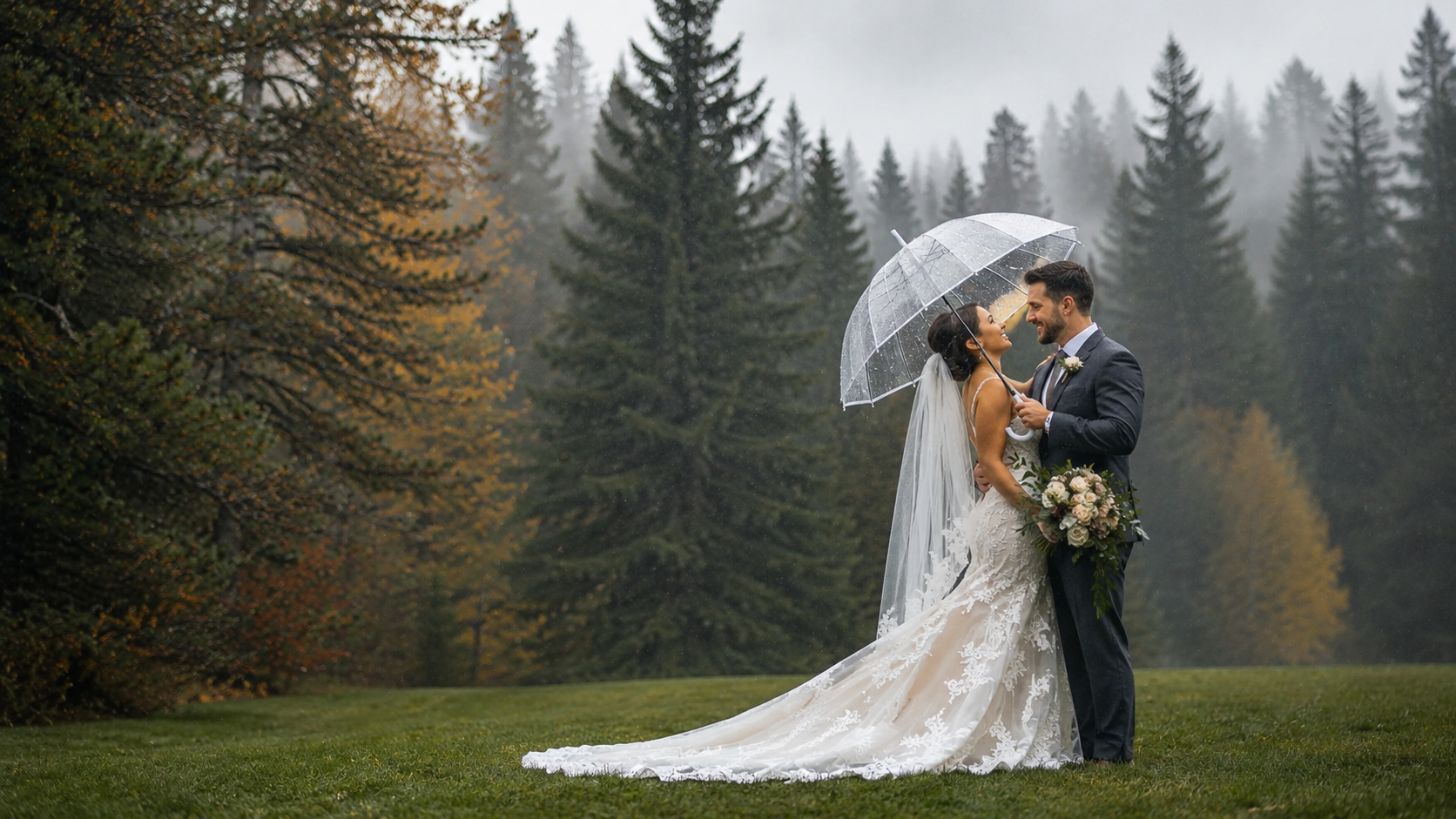
If any part of the day is outdoors — the ceremony, drinks reception, photos — couples sometimes only think about rain cover on the morning itself, when nothing can actually be changed. Since 2022, venues with an indoor civil ceremony licence can also host it in their linked outdoor grounds, provided the registrar agrees the specific location is suitable, but that flexibility only helps if it's been discussed and confirmed in advance.
The fix: ask about the indoor backup specifically when you view the venue, not on the day, and get it confirmed in writing.
Trying to please everyone
Guest list boundaries, seating arrangements, family expectations about readings or traditions — trying to accommodate every request from every relative is a fast route to a day that doesn't feel like yours. It's also one of the most frequently cited regrets among couples looking back on their planning process.
The fix: agree your non-negotiables with your partner early, communicate them kindly but clearly, and don't relitigate them every time someone pushes back.
Underestimating hidden costs
Service charges, corkage fees, evening staff overtime, cake-cutting fees, VAT that wasn't included in a quoted price — these rarely appear in the headline cost of a venue or supplier, and they can add up to a meaningful chunk of a budget if they're not asked about upfront.
The fix: ask every supplier directly whether their quote is genuinely all-in, and get a full breakdown in writing before signing anything.
Frequently Asked Questions
What's the most common wedding planning mistake in the UK?
Not setting a firm budget before booking anything. Over half of UK couples overspend their original budget, and it's usually because no clear number was agreed at the outset rather than any single expensive choice.
Should I book my venue before finalising the guest list?
No. Guest count directly affects venue capacity and per-head catering costs, so it should be agreed — at least roughly — before venue viewings begin.
What happens if I leave legal paperwork too late for my wedding?
If you miss the statutory notice window (29 days in England, Wales and Scotland; 28 in Northern Ireland), the ceremony legally cannot go ahead on that date. Most registrars recommend giving notice 10–12 weeks out to leave a safety margin.
Is a humanist wedding legally binding in the UK?
Only in Scotland, where humanist ceremonies have been fully legally recognised since 2005. In England, Wales and Northern Ireland, couples need a separate civil ceremony to make the marriage legal, regardless of how the main ceremony is conducted.
How do I avoid picking the wrong wedding supplier?
Ask for full galleries rather than highlight reels, read reviews from real weddings, get everything in writing, and check for public liability insurance before paying any deposit.
What hidden costs catch couples out most often?
Service charges, corkage, staff overtime and cake-cutting fees are the most commonly missed. Always ask suppliers directly whether their quoted price is genuinely all-in.
Do I need a wet-weather plan even if my ceremony is indoors?
If any part of the day — photos, drinks reception, evening reception — happens outdoors, yes. Confirm the indoor backup when you view the venue, not on the day itself.